
Lingvist Review: What $6.67 a Month Gets You
We opened a Lingvist account, worked Spanish word cards, opened Custom Decks, and took the yearly trial checkout up to the Subscribe button on 11/12/2026.

Lingvist is a vocabulary app, not a full course: you type the missing word into real sentences, with a short grammar note on each card. The yearly plan works out to $6.67 a month. A free account opens without a card, but the free trial comes only with the yearly plan and asks for a card or PayPal.
On this page
- How we scored Lingvist
- What Lingvist really costs per month
- What's in each plan
- Is Lingvist free? Free plan or free trial: what you actually get
- Cancellation and refunds (web vs App Store and Google Play)
- Lingvist languages: what's offered and how deep each course goes
- Your data: what Lingvist collects and how to delete your account
- Support: channels, hours, and how they answered us
- What we saw inside Lingvist
- Who should pick Lingvist (and who shouldn't)
- What other users say
- Alternatives
- $79.99 a year ($6.67 a month) or $9.99 a month, web and App Store (11/12/2026)
- 14-day free trial with the yearly plan only, card or PayPal required
- 15 languages for English speakers, Japanese and Korean included
- Typed sentence cards with grammar notes, plus decks built from your own text or files
- Self-serve account deletion and data download from the Account page
What we checked
- A Lingvist account opened with an email, no card asked, about 3 minutes to the first exercise
- Spanish word cards with grammar notes, the home screen, Insights, and Custom Decks
- Both plans and the yearly checkout up to Subscribe, on a US connection (11/12/2026)
- Account page: data download, deletion, and a support form sent on 11/11/2026
- Not done: a paid plan, a cancellation, a refund request, weeks of study
How we scored Lingvist
Is Lingvist worth it? As a cheap daily vocabulary habit, yes: it scores 7.0 out of 10. It loses points on Features, because Lingvist is a word trainer and leaves conversation, tutors, and course levels to other tools.
| Axis | Weight | Points | What the score is based on |
|---|---|---|---|
| Teaching quality | 30% | 7 (Good) | Typed answers in real sentences, a grammar note on each card; translation complaints in reviews. Not from weeks of study |
| Price & free plan | 20% | 9.5 (Excellent) | $6.67 a month on the yearly plan; free account without a card; the trial needs a card or PayPal |
| Features | 15% | 1 of 10 | Grammar notes on every card; nine items not confirmed |
| Ease of use | 15% | 9.5 (Excellent) | First exercise about 3 minutes after sign-up; 4.6 in the US App Store |
| Trust | 10% | 7 (Good) | Clear trial billing, self-serve deletion; no refund terms found; support replied in about 8.5 hours |
| Language coverage | 10% | 7 (Good) | 15 languages for English speakers; depth not stated in CEFR levels |
The weights and how grades turn into points are on how we grade apps. Features is a count against a fixed list of 10. Lingvist gets one:
- Counted: grammar explanations, which we saw as a note on every card.
- Not confirmed as of : a placement test, spaced-repetition review, speech recognition with feedback, offline lessons, live tutors, an AI conversation partner, sync between web and phone, a course labeled B2 or higher, a certificate.
Lingvist's App Store listing claims three of these: "Get level placed for free," "scientifically proven spaced repetition methodology," and speech recognition for pronunciation. We count only what we could see. Our sign-up asked no level questions, a new account is too young to show words coming back at growing intervals, and on the web every answer is typed.
What Lingvist really costs per month
$6.67 a month on the yearly plan: $79.99 a year, charged in one payment. The monthly plan is $9.99. On , from a US connection, the pricing page, the plan screen inside the app, and the checkout all showed those prices, and the US App Store listed the same two.
| Plan | Price | Per month | Trial |
|---|---|---|---|
| Annual | $79.99 a year | $6.67 | 14 days |
| Monthly | $9.99 a month | $9.99 | None |
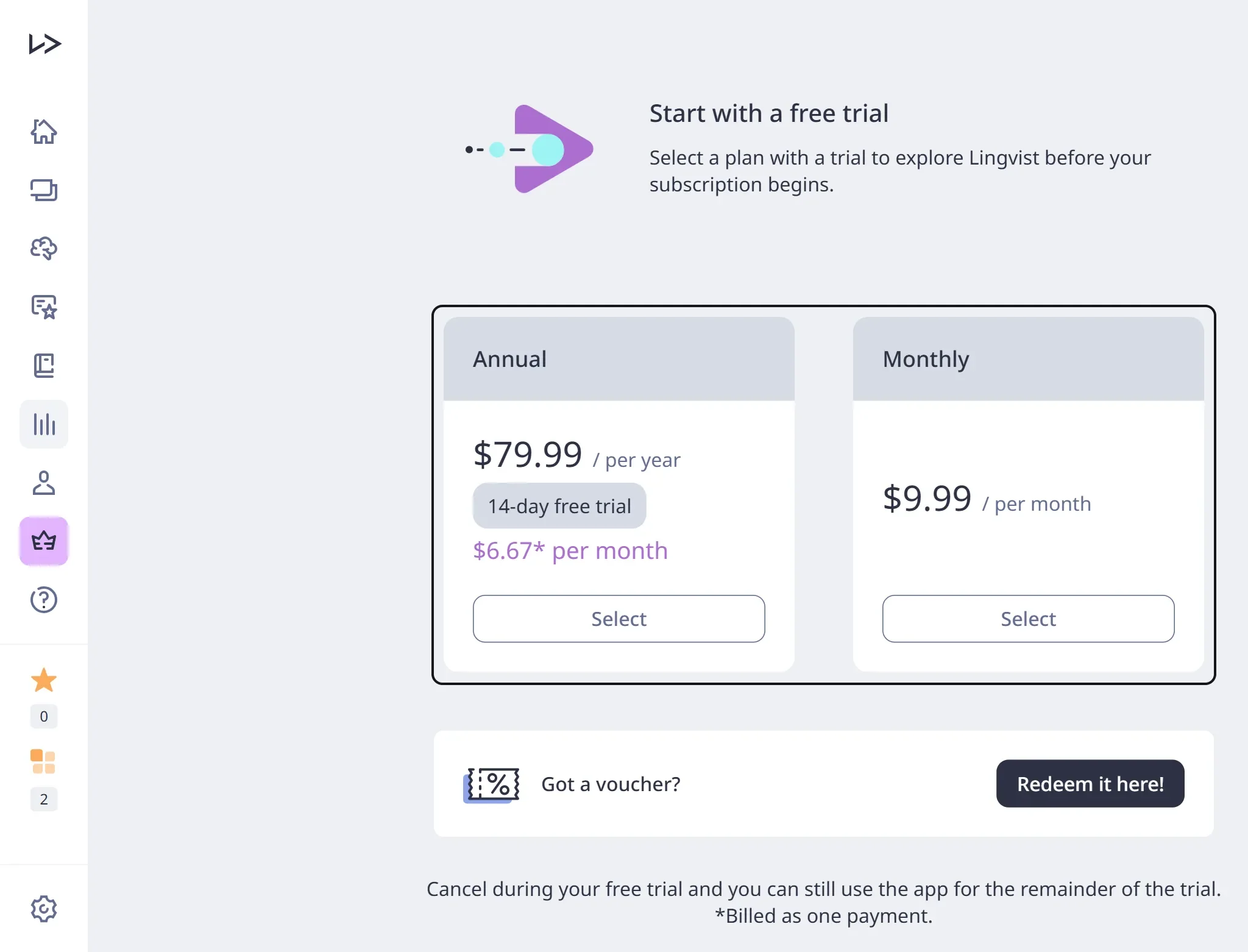
The checkout adds nothing on top. Its order summary read "$79.99 / per year (VAT included)," with no separate sales tax line and no ZIP code asked before the Subscribe button. In the App Store, sales tax depends on your state.
The App Store's in-app purchase list is messier. On it also showed a 12-month item at $199.99 and monthly items at $19.99 and $49.99, without saying what they are. The two plans in the app match $79.99 and $9.99, so read the screen before you pay.
For context, here's how the yearly price sits next to other apps we've priced:
| App | Yearly | Per month | Checked |
|---|---|---|---|
| Busuu Premium | $72.99 | $6.08 | |
| Lingvist | $79.99 | $6.67 | |
| Babbel | $107.40 | $8.95 | |
| LingQ Premium | $119.99 | $10.00 | |
| Rosetta Stone | $159 | $13.25 |
What's in each plan
The same thing in both. Annual and Monthly differ only in the trial: the plan table on Lingvist's pricing page lists AI-powered learning with smart algorithms, everyday vocabulary, progress tracking, Custom Decks, and customer support for both. A third column, Lingvist for Business, adds an account manager and vocabulary courses built for a company's industry on request.
So paying monthly buys flexibility, not more content. At $9.99 a month (), the yearly plan pays off from the ninth month: eight months come to $79.92.
Inside the app, a plan unlocks what the free account keeps behind an "Unlock all content" banner. The home screen we saw counts progress through the general Spanish (Latin America) deck, 4,993 words, and sets a daily goal of 50 cards.
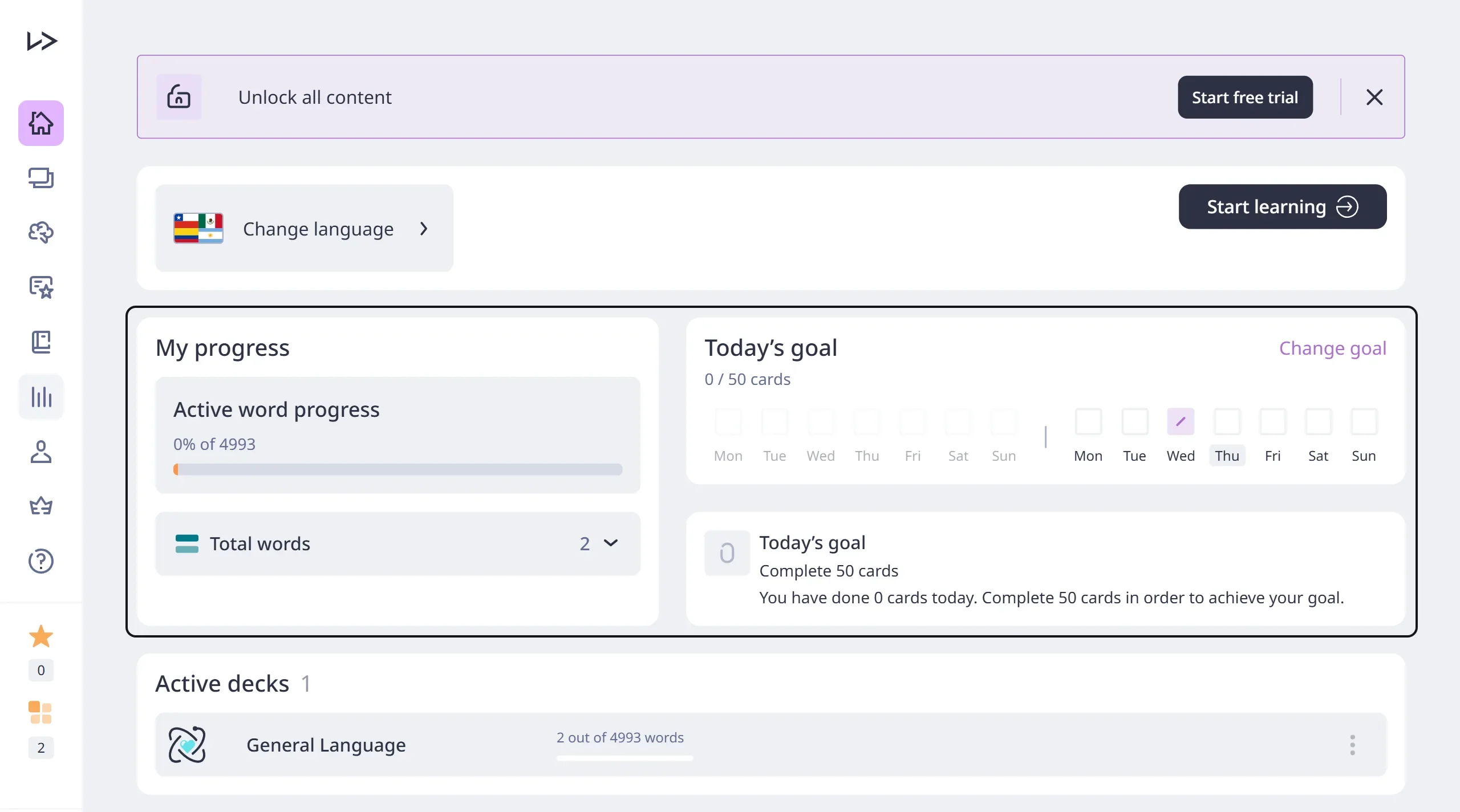
Next to the general deck sat 16 topic decks, from Travel, Food, and Daily Conversations to Medical terms, Business (Upper intermediate), and grammar sets such as "Ser or Estar?" and Object Pronouns.
Is Lingvist free? Free plan or free trial: what you actually get
Not fully. Lingvist's own FAQ answers the question this way: "Lingvist is a subscription based app. However, there's a trial period that comes at no cost when you choose the 12-month subscription."
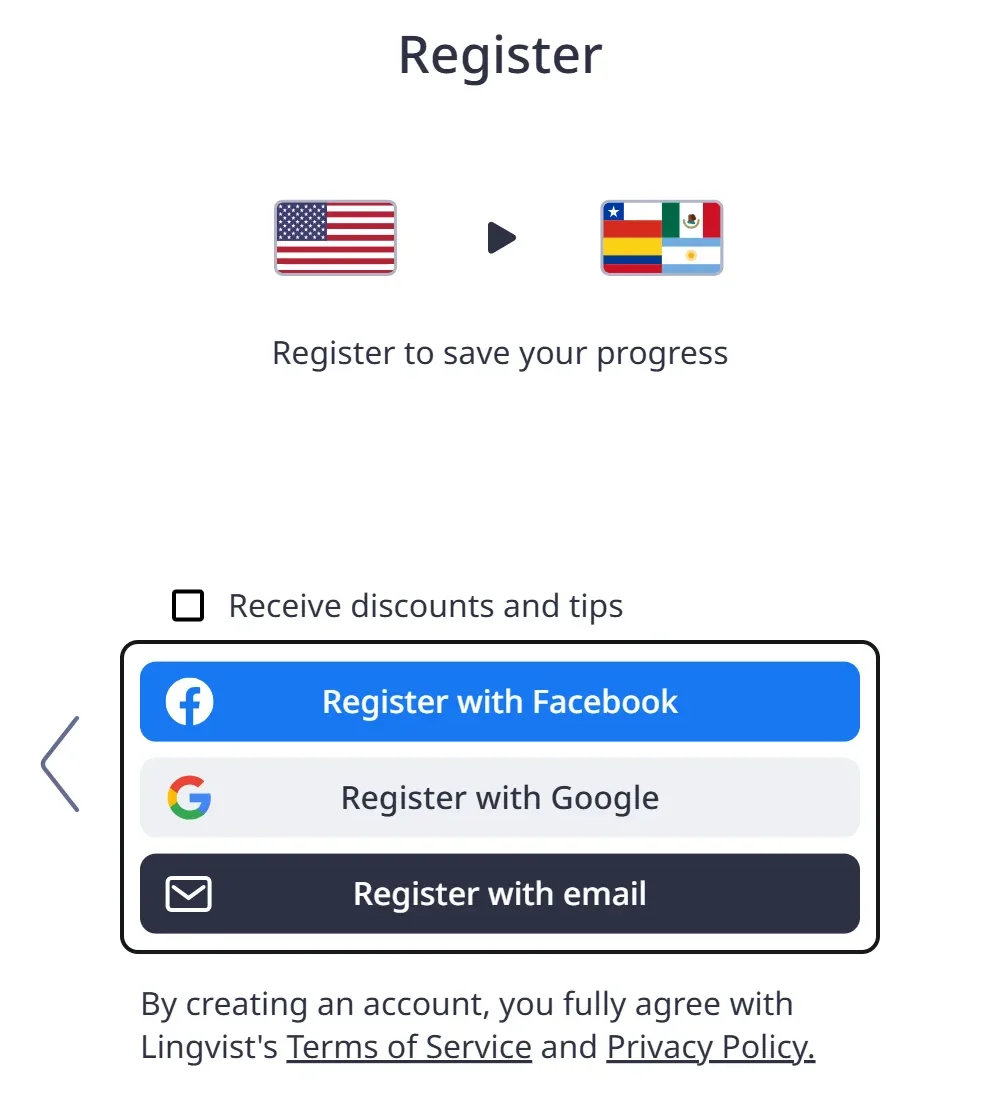
There is a free account too. The sign-up took an email and a password, with Google and Facebook as other options, and no card. The first exercise came up about three minutes later. Lingvist doesn't publish what the free account includes, and the home screen kept offering "Start free trial."
The trial is 14 days and only on the yearly plan. The checkout on put dates on it: the trial ran from that day, and the first $79.99 charge was set for November 26, 2026, with nothing owed if you cancel before then. Payment is by card or PayPal, and the Subscribe button stays gray until you tick the box agreeing to Lingvist's Terms & Conditions.
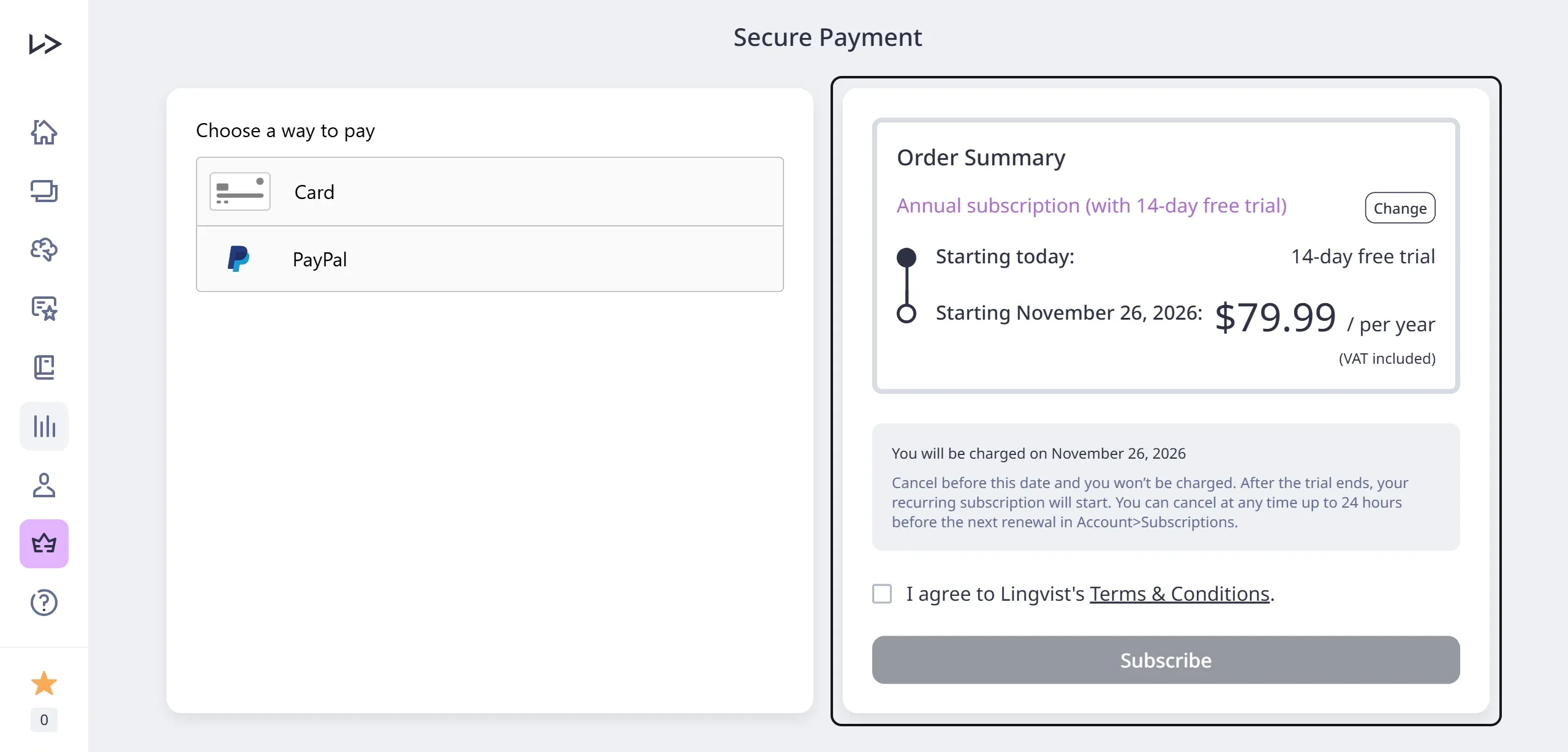
The FAQ narrows down when the money moves: the card is billed within the final 24 hours of the trial. It also answers why a free trial wants payment details at all: "Our subscriptions are auto-renewing," and the trial is simply the first, zero-cost period of one.
How to use the 14 days
- Day one: write down the date. Billing happens in the last 24 hours, so your real deadline is day 13.
- Check your language's sentences. Translation errors are the most common topic in low reviews. Look a few cards up in a dictionary.
- Type at your usual pace for a few days. Every answer is typed on the web. If that feels like a chore by day three, it won't get easier.
- Try Custom Decks with a text you actually need, such as a work email or a recipe.
- Decide before day 13, and turn off renewal under Account, then Subscriptions, if it isn't for you.
Cancellation and refunds (web vs App Store and Google Play)
Canceling is self-serve. Per the pricing FAQ, auto-renewal can be switched off at any time under Account, then Subscriptions. If you cancel mid-trial, the app stays open until day 14 and no charge follows. Cancel inside the last 24 hours, and the FAQ says only that future renewals stop.
Plans bought in the App Store or Google Play are canceled in the store's own subscription settings, and refunds for them go through Apple or Google.
Refunds for web plans are the gap. Neither the pricing page nor its FAQ mentions refunds on , and we couldn't open Lingvist's Terms at the usual addresses. Until you find terms that say otherwise, treat a web charge as non-refundable and cancel early.
Lingvist languages: what's offered and how deep each course goes
Fifteen languages for an English speaker. The course picker on the pricing page lists 16 courses, and the 16th is English. Inside the app on , the language menu showed the same set: Spanish in two versions (Latin America and Spain), French, German, Italian, Portuguese (Brazil), Dutch, Danish, Swedish, Norwegian, Polish, Russian, Estonian, Japanese, and Korean.
Estonian is there because Lingvist is an Estonian company, based in Tallinn. Japanese and Korean are less common among cheap apps. Switching courses is two clicks on the home screen, under Change language.
The plan table on the same pricing page promises "Learn 50+ languages faster than ever before." We can't square that with a list of 16 courses. It may count language pairs, such as Spanish for French speakers, but Lingvist doesn't say. Plan on the 15.
Depth isn't stated in CEFR levels. The general Spanish deck holds 4,993 words, ordered from the most common, so depth here means how far into that list you get. Low App Store reviews flag course quality: Russian grammar hints "wrong or misleading about 30%" of the time () and "so many translations issues" in French ().
Your data: what Lingvist collects and how to delete your account
Deletion takes two clicks: Account, then "Delete your account." The same page has "Download your data," which emails you a machine-readable copy of the personal data Lingvist holds on you.
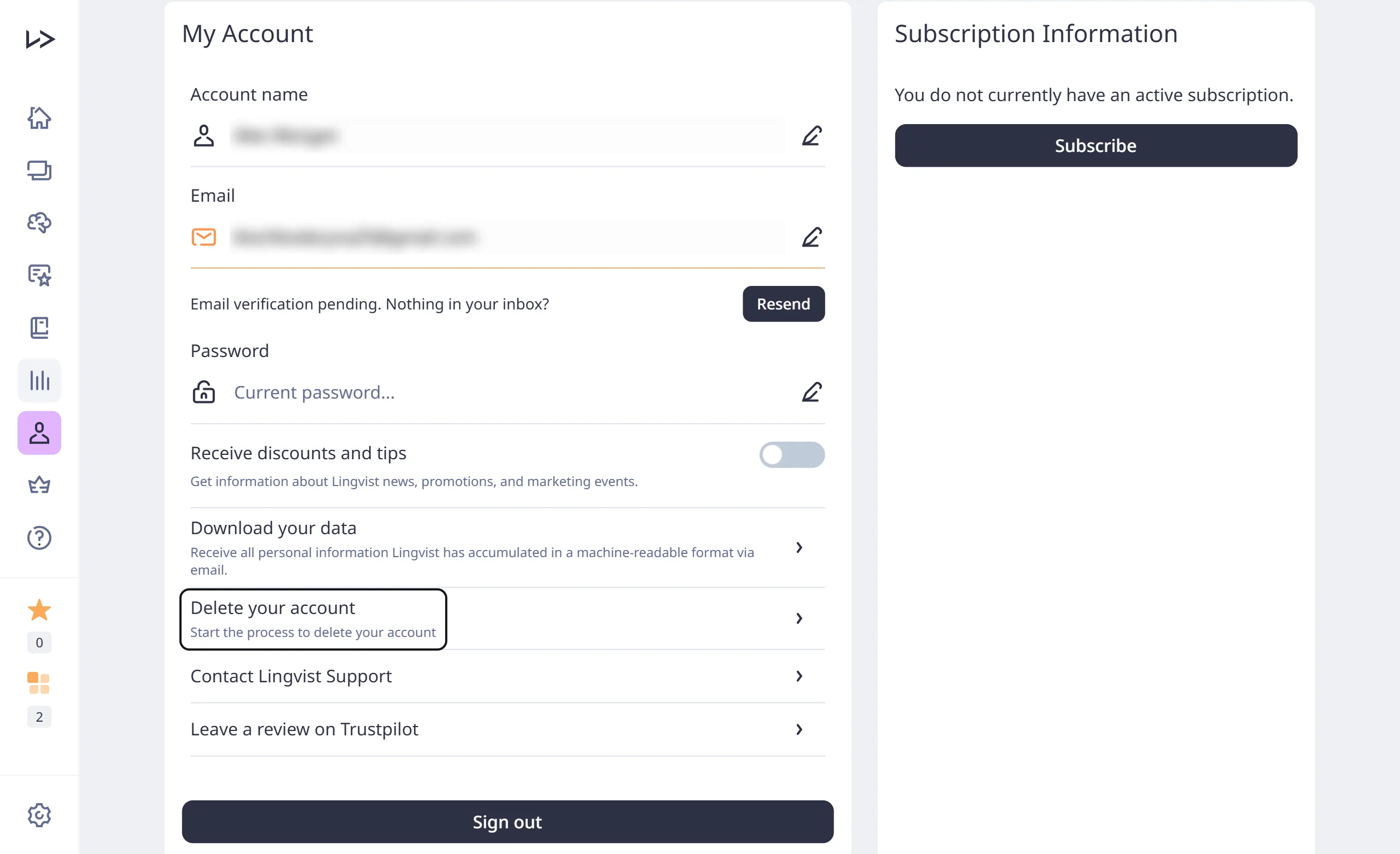
Lingvist Technologies OÜ is registered in Tallinn, and its privacy policy follows European data law (checked ). It says your name and email are deleted from production databases "within 7 days" of account termination and that backups are "permanently removed after 90 days." Payment records, including the price, currency, and your location at the time of payment, are kept for seven years, which the policy says Estonian law requires.
The App Store privacy label lists location, contact info, identifiers, usage data, and diagnostics as data linked to you. We found no section written for California residents.
Support: channels, hours, and how they answered us
Two channels: a form under Account, "Contact Lingvist Support," and the email hello@lingvist.io, which the checkout page gives under "Have more questions?" Neither lists hours. We sent our standard question through the form on at 5:17 a.m. New York time: can I switch to a different language without paying again? Support replied about 8.5 hours later: "Of course! You can learn any of the languages we offer."
The answer to that question is partly visible in the app anyway: the language menu switches courses within the same account, and the plan pages don't price languages separately.
What we saw inside Lingvist
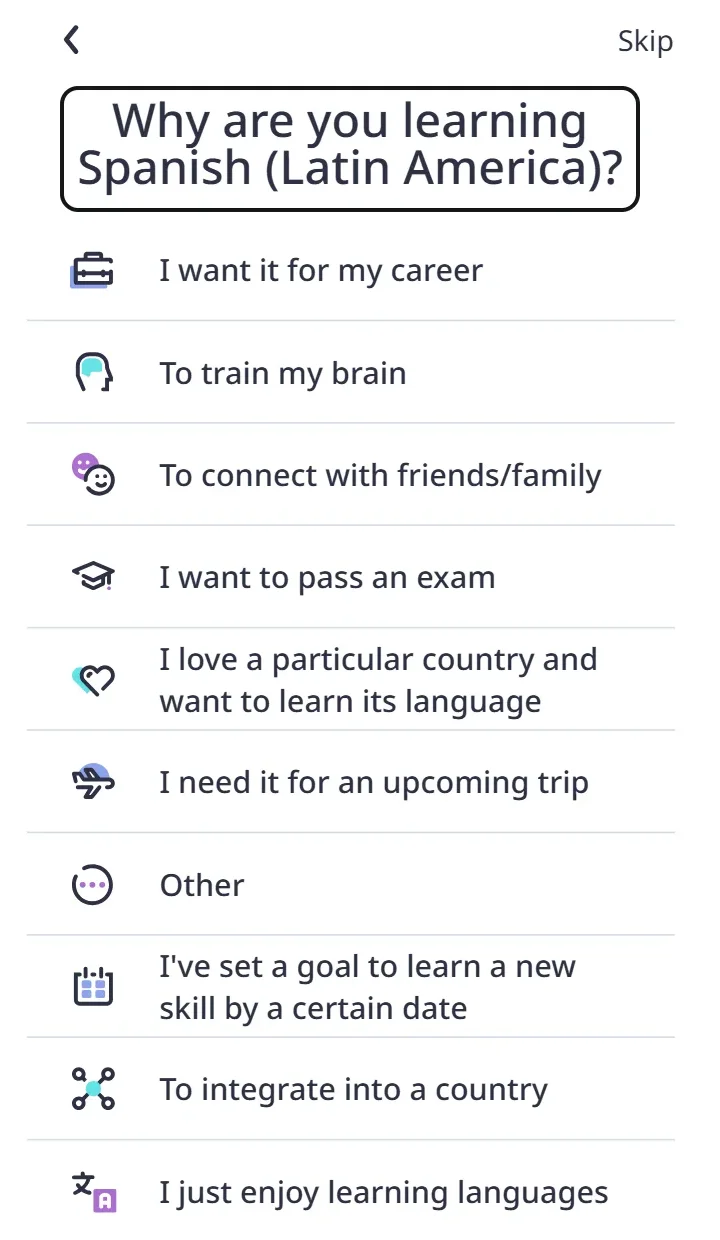
After you pick a language, sign-up asks three short questions before the account: why you're learning, your age, and how you heard about Lingvist. The first offers ten reasons to pick from.
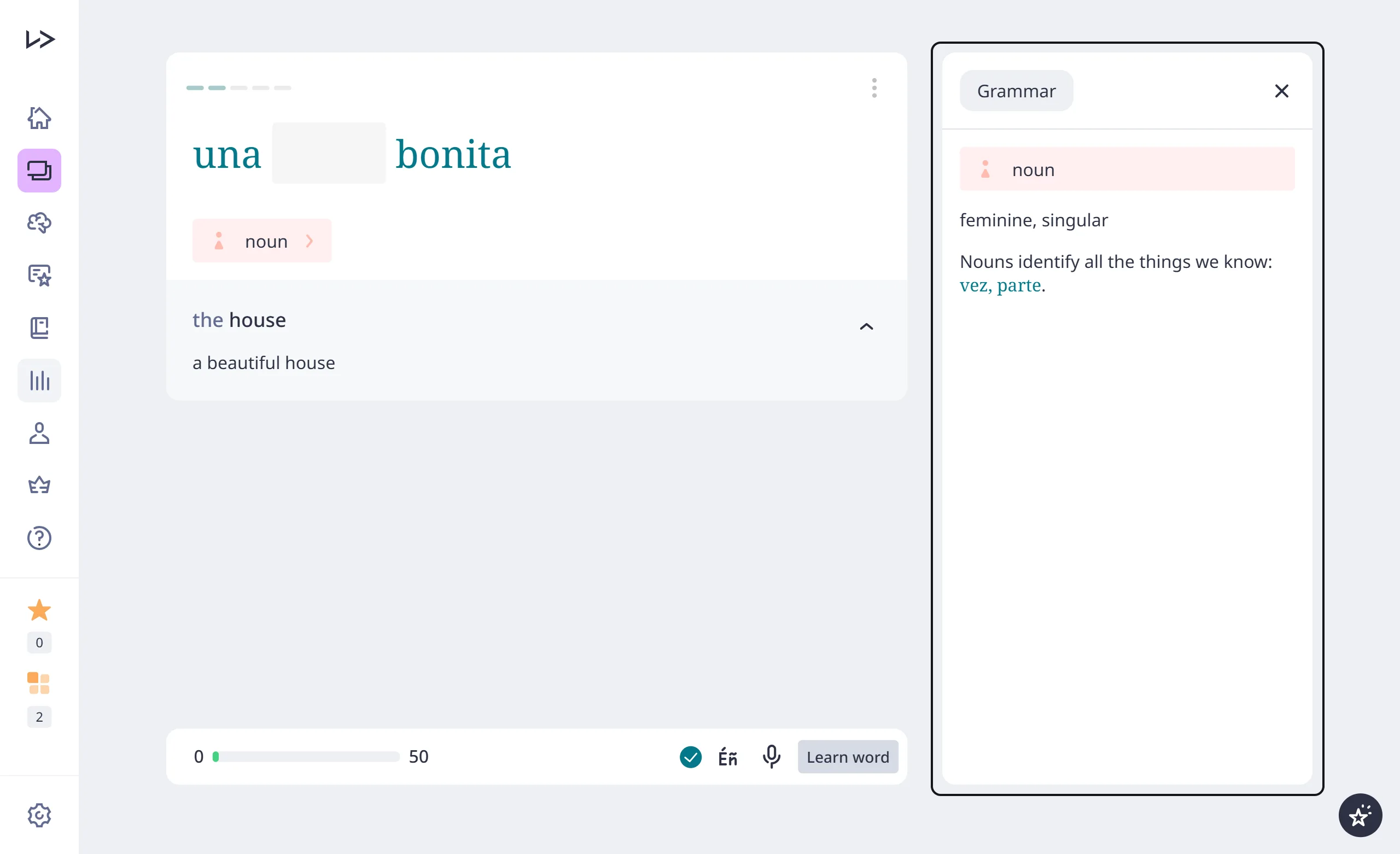
Then the flashcards. Each one is a sentence in Spanish with a gap and its English translation underneath. Ours was "una ___ bonita," "a beautiful house," with the hint "noun." You type the word. A wrong letter is marked in red. A grammar panel opens beside the card. For "casa" it read "noun feminine, singular," with a line on what nouns are and two more examples.
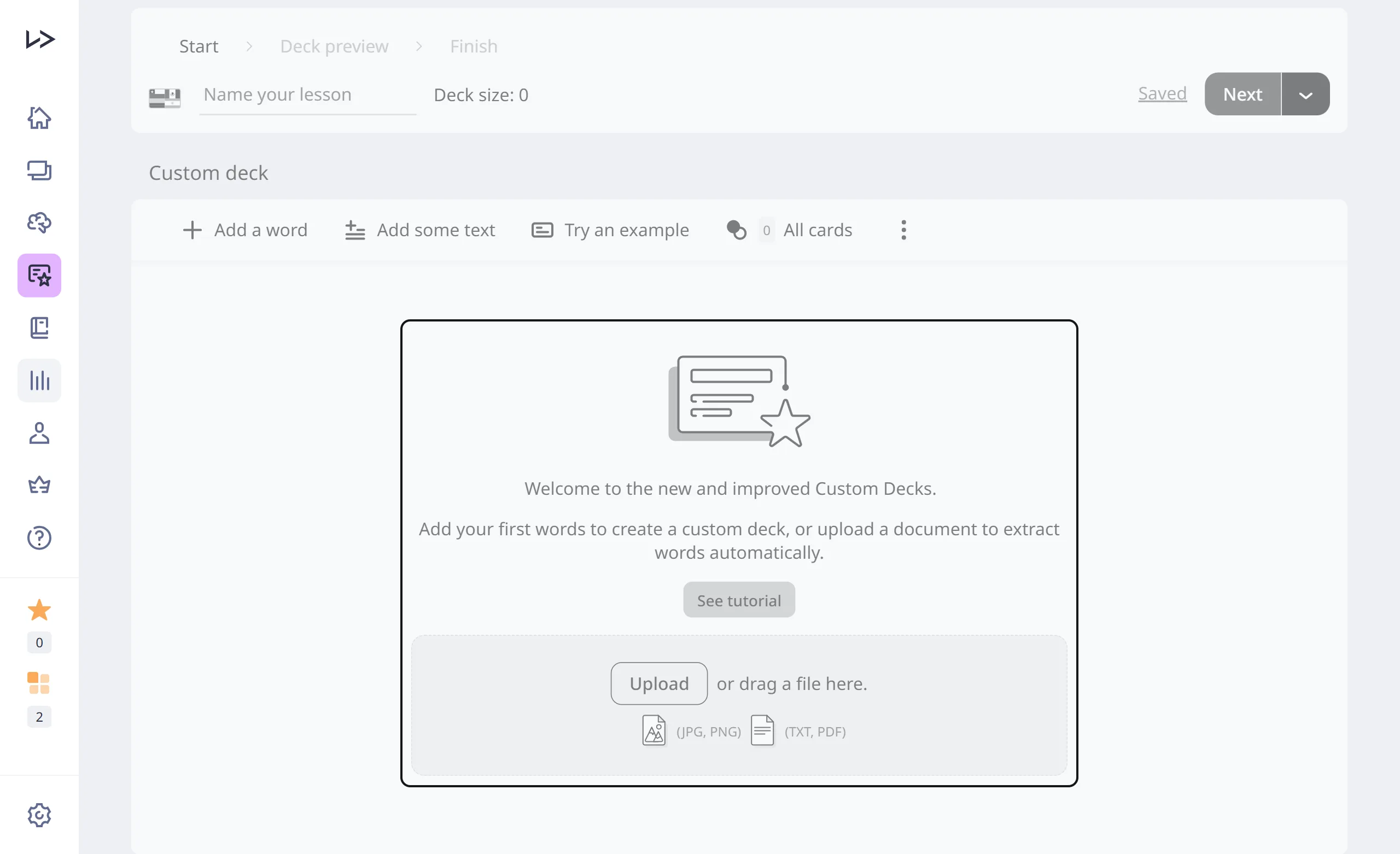
Custom Decks is the part most worth a look. You add words one at a time, paste a text, or upload a JPG, PNG, TXT, or PDF file, and Lingvist pulls out the words to drill. It's the closest the app comes to teaching what you need rather than the next most common word.
Insights tracks days, streak, cards, and time spent. On a new account it was nearly empty, so we have nothing to say about how useful it gets.
Who should pick Lingvist (and who shouldn't)
- ✓ You want a vocabulary habit next to a course or a tutor
- ✓ You'd rather type answers than tap them
- ✓ You need words from your own texts, via Custom Decks
- ✕ It would be your only tool for a new language
- ✕ You want conversation practice
- ✕ You won't give a card before trying the full course
Is Lingvist good? For its job, yes: 50 typed cards a day, a short grammar note on each, at $6.67 a month on the yearly plan (). Teams can ask about Lingvist for Business, which adds an account manager and industry vocabulary. We didn't price it. The best language learning apps page compares Lingvist with full courses on the same axes.
What other users say
The Lingvist app, listed as "Lingvist: Learn Languages Fast," had 4.6 stars from about 3,700 ratings in the US App Store on . An average that high hides what goes wrong in Lingvist app reviews, so we sorted the low ones: every one- and two-star review in the 12 months before , 14 in all.
| Topic | Reviews | Share |
|---|---|---|
| Content and translations | 8 | 57% |
| Billing and auto-renewal | 5 | 36% |
| App bugs | 1 | 7% |
Fourteen reviews is a small sample, and we didn't verify any of them. Content complaints are mostly about errors: "I am forever reporting translation errors," one reviewer wrote on . Billing complaints are about the trial and about expecting a free app. "I signed up for the free trial and was immediately charged the full annual plan," another wrote on ; two more simply titled theirs "Not free" and "It's not free."
The rest are about where the app is going. A reviewer on wrote that two years of changelogs showed "Zero added features" that users had asked for, and one on asked Lingvist to "STOP ADDING WORDS TO MY ACTIVE DECK," describing a deck of more than 3,000 words that kept growing. We couldn't read Lingvist threads on Reddit, which blocks automated reading.
Alternatives
It depends on what Lingvist leaves out. For a course that teaches grammar step by step, Babbel was $107.40 a year, $8.95 a month, on ; see the Babbel review. For reading and listening to real texts, the LingQ review covers a free plan with a 20-word cap. For Japanese or Korean in a full course, Rosetta Stone was $159 a year on , in the Rosetta Stone review. For flashcard-based learning, the Fluent Forever review is another option.
Common questions
Is Lingvist free?
Partly. A free account opens without a card and lets you start word cards, but Lingvist calls itself 'a subscription based app,' and the full course sits behind a plan. The 14-day free trial comes only with the yearly plan, $79.99, and needs a card or PayPal. The monthly plan, $9.99, has no trial (prices as of ).
Is Lingvist worth it?
As a cheap vocabulary habit next to a course or a tutor, yes: it scores 7.0 out of 10, and the yearly plan is $6.67 a month (). As your only tool, no. It drills words in sentences with short grammar notes. It doesn't teach conversation, and low App Store reviews often mention translation errors.
Is Lingvist good for beginners?
It starts with the most common words and has a short grammar note on each card, so a beginner can follow it. What it lacks is a lesson path that explains how sentences are built. A beginner will get more from Lingvist with a course or a tutor alongside it.
How do I cancel Lingvist?
Turn off auto-renewal under Account, then Subscriptions. A trial bills in the 24 hours before it ends, so cancel before that to avoid the first charge. You keep access for the rest of the trial either way. Plans bought in the App Store are canceled in Apple's subscription settings.
Can I delete my Lingvist account?
Yes, yourself. On the web, Account opens a page with Delete your account and Download your data. Lingvist's privacy policy says your name and email leave its production databases within 7 days and its backups after 90 days. Payment records stay for seven years under Estonian law.
What languages does Lingvist offer?
Fifteen for English speakers: Spanish (Latin America and Spain), French, German, Italian, Portuguese (Brazil), Dutch, Danish, Swedish, Norwegian, Polish, Russian, Estonian, Japanese, and Korean. Lingvist's plan table says '50+ languages,' which doesn't match the list it shows.